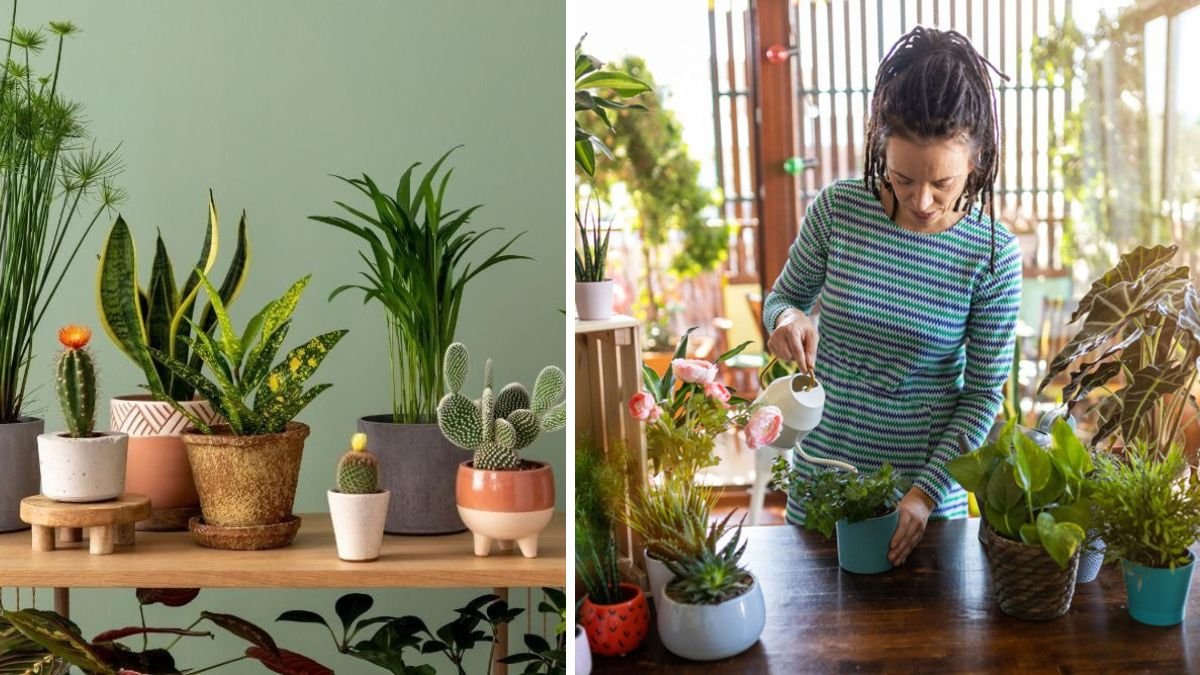
Indoor plants bring life, color, and improved air quality to your home, but keeping them thriving can sometimes feel like a challenge. Even experienced plant lovers occasionally struggle with wilting leaves, slow growth, or plants that refuse to bloom. Experts agree that many indoor plant problems stem from a few common mistakes that are surprisingly easy to avoid.
This guide highlights the biggest errors people make with their indoor plants and provides practical, expert-approved solutions to help your greenery flourish year-round.
Mistake 1: Overwatering
- Why it happens: Many people water indoor plants on a fixed schedule rather than based on the plant’s actual needs.
- The problem: Overwatering can cause root rot, yellowing leaves, and fungal growth.
- Expert tip: Check the soil before watering. Most plants prefer the top 1–2 inches of soil to dry out before the next watering. Use pots with drainage holes to prevent water from accumulating at the bottom.
Keeping a consistent watering routine based on plant needs rather than the calendar is the simplest way to prevent overwatering disasters.
Mistake 2: Underwatering
- Why it happens: Some indoor gardeners forget to water or assume the plant can survive long periods without moisture.
- The problem: Dry soil can cause leaves to droop, brown edges, and slowed growth.
- Expert tip: Learn your plant’s water requirements. Tropical plants generally prefer consistently moist soil, while succulents and cacti need less frequent watering.
Understanding each plant’s natural habitat is essential. Tropical plants in arid conditions can quickly show stress if left dry.

Mistake 3: Ignoring Light Requirements
- Why it happens: People often place plants where there’s “some light” without considering intensity or duration.
- The problem: Insufficient light can lead to leggy growth, pale leaves, and lack of blooms. Too much direct sunlight can scorch leaves.
- Expert tip: Identify your plant’s light preference. Bright, indirect light suits many houseplants, while low-light tolerant species like snake plants can survive in dim corners. Rotate plants occasionally to ensure even growth.
Experts note that correct placement is the most overlooked factor in indoor plant success.
Latest Posts
- With Just 1 Bottle of Water How I Was Shocked by What Happened When Growing Vegetables
- Maximize Your Home Garden with the Hanging Pea Sprout Growing Model – Space-Saving, High-Yield, and Easy-to-Manage Vertical Gardening Solution
- Just Water – The Secret to Growing Plump, White Peanut Sprouts Right at Home: A Step-by-Step Guide for Beginners
- Growing Zucchini at Home in a Container: How to Cultivate Large, Long Fruits with a 1-to-72 Day Step-by-Step Diary for Maximum Yield
- Grow Long Beans on the Terrace in Used Recycling Baskets: The Ultimate Guide to Easy, Space-Saving, and High-Yield Terrace Gardening
- How to Grow Tons of Long Beans Easily Without a Garden – A Complete Guide to Growing Healthy Yardlong Beans Without Fertilizers or Pesticides
- Easy Long Bean Growing Trick – No Garden, No Fertilizer, No Pesticide
- Grow Bitter Melon in Bottles — Harvest So Big You Can’t Eat It All! The Ultimate Guide to Bottle Gardening for Maximum Yields
- Growing Garlic Made Easy: No Soil, Fast Results – The Ultimate Guide to Growing Fresh Garlic Indoors Without Traditional Soil
- Wall-Mounted Hydroponic Watermelon System: Grow Large, Juicy, and Delicious Watermelons at Home with Minimal Space and Maximum Yield
Mistake 4: Using the Wrong Soil
- Why it happens: Many gardeners use generic potting mix for all plants.
- The problem: Different plants need specific soil textures and drainage. Cacti and succulents need fast-draining soil, while tropical plants thrive in nutrient-rich, moisture-retentive mixes.
- Expert tip: Match soil to plant type. Adding perlite or sand can improve drainage for succulents, while compost or peat-based mixes benefit moisture-loving species.
Choosing the right soil improves root health, reduces disease, and encourages robust growth.
Mistake 5: Neglecting Humidity
- Why it happens: Indoor environments, especially in winter, are often dry.
- The problem: Low humidity can cause brown leaf tips, curling leaves, and slower growth in tropical plants.
- Expert tip: Increase humidity by grouping plants together, using a pebble tray with water, or adding a small humidifier. Regular misting helps, but it’s less effective than maintaining overall humidity levels.
Experts recommend monitoring humidity for sensitive plants like ferns, orchids, and calatheas.
Mistake 6: Skipping Fertilization
- Why it happens: Indoor plants rely on the nutrients in their potting soil, which deplete over time.
- The problem: Nutrient deficiency leads to slow growth, pale leaves, and fewer blooms.
- Expert tip: Fertilize according to the plant’s growth cycle. Most houseplants benefit from diluted, water-soluble fertilizer every 4–6 weeks during the growing season (spring and summer). Reduce feeding in fall and winter.
Proper fertilization supports leaf health, strong stems, and vibrant flowers without overloading the plant.

Mistake 7: Not Pruning or Deadheading
- Why it happens: Many indoor plant owners avoid pruning to “let the plant grow naturally.”
- The problem: Overgrown or damaged stems and spent flowers can reduce air circulation and energy flow, leading to weaker growth.
- Expert tip: Remove dead or yellowing leaves regularly and trim back overgrown stems. For flowering plants, deadhead spent blooms to encourage new flowers.
Pruning also allows light to penetrate inner leaves, keeping plants compact and attractive.
Mistake 8: Using the Wrong Container
- Why it happens: Many people select pots based on aesthetics rather than functionality.
- The problem: Containers without drainage can trap water, while oversized pots may retain excess moisture and slow growth.
- Expert tip: Use pots with drainage holes. Choose a container size slightly larger than the root ball and repot every 1–2 years as the plant grows.
Experts emphasize that the right pot protects roots and helps maintain healthy soil conditions.
Mistake 9: Overcrowding Plants
- Why it happens: People often place multiple plants in tight spaces for a lush look.
- The problem: Crowded plants compete for light, air, and water, increasing the risk of pests and disease.
- Expert tip: Allow adequate spacing between plants for airflow. Rotate container positions periodically for even light exposure.
Even a few extra inches can prevent many common indoor plant problems.
Mistake 10: Ignoring Pests and Disease
- Why it happens: Indoor plants are often treated as low-maintenance, so pests go unnoticed.
- The problem: Spider mites, aphids, mealybugs, and fungus gnats can damage leaves and stunt growth.
- Expert tip: Inspect plants regularly, wipe leaves with a damp cloth, and treat infestations promptly with insecticidal soap or neem oil. Maintain clean pots and avoid standing water to reduce pest risks.
Proactive monitoring prevents minor issues from becoming major plant health problems.

Mistake 11: Moving Plants Too Frequently
- Why it happens: People reposition plants for decoration or light changes.
- The problem: Frequent relocation can stress plants, causing leaf drop or slowed growth.
- Expert tip: Place plants in a stable environment where light and temperature are consistent. If you must move them, do so gradually to allow acclimation.
Experts note that most houseplants thrive best with consistent conditions rather than constant relocation.
Mistake 12: Ignoring Seasonal Changes
- Why it happens: Many assume indoor plants need the same care year-round.
- The problem: Watering, light, and feeding requirements change with seasonal variations in daylight and temperature.
- Expert tip: Adjust care routines according to the season: less water and fertilizer in winter, more attention during active growth in spring and summer.
Observing seasonal cycles helps plants maintain vigor and prevents stress.
Mistake 13: Overestimating Plant Resilience
- Why it happens: People assume all indoor plants are “easy-care.”
- The problem: Each species has unique requirements for light, water, humidity, and temperature. Ignoring these needs leads to underperformance or decline.
- Expert tip: Research each plant’s specific needs before purchasing. Even low-maintenance plants benefit from proper care and attention.
Knowledge is power: understanding your plant’s natural habitat informs better home care.
Final Thoughts
Indoor plants are incredibly rewarding but require attention to their environment, watering, nutrition, and maintenance. Experts agree that most plant problems stem from a handful of preventable mistakes: overwatering, poor light, improper soil, low humidity, neglecting fertilization, and ignoring pruning or pests.

By avoiding these common errors and following expert guidance, you can enjoy thriving indoor plants that enhance your home year-round. With proper care, your plants won’t just survive—they will flourish, providing beauty, clean air, and a connection to nature in every room.
A little knowledge and consistency go a long way in keeping indoor plants healthy and happy, making your indoor garden a source of ongoing joy rather than frustration.