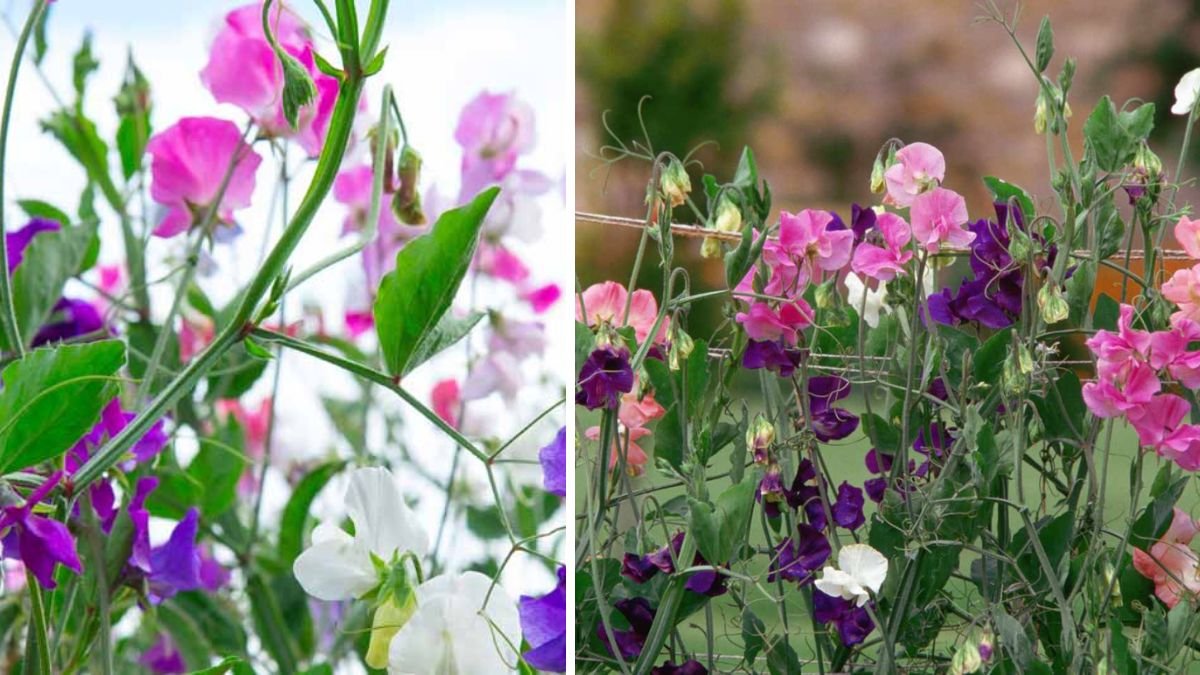
Sweet peas are beloved for their delicate flowers, intoxicating fragrance, and vigorous climbing habit. With the right techniques, these charming vines can grow up to fifteen feet tall, transforming fences, trellises, and garden arches into walls of color and scent. Many gardeners are surprised to learn that sweet peas are capable of such dramatic height—but only when their needs are met from the very beginning.
This guide explains how to grow sweet peas to their full vertical potential, from soil preparation and seed starting to training, feeding, and maintenance.
Why Sweet Peas Grow So Tall
Sweet peas (Lathyrus odoratus) are natural climbers. In ideal conditions, they invest energy into upward growth in order to reach sunlight and spread their blooms. Tall varieties are bred specifically for long stems, making them favorites for cut flowers and vertical gardens.
Key factors that influence height include:

- Soil depth and fertility
- Cool early growing conditions
- Proper support structures
- Regular feeding and harvesting
Choosing the Right Sweet Pea Variety
Not all sweet peas are created equal. To achieve 10–15 feet of growth, select tall or climbing varieties, such as:
Latest Posts
- With Just 1 Bottle of Water How I Was Shocked by What Happened When Growing Vegetables
- Maximize Your Home Garden with the Hanging Pea Sprout Growing Model – Space-Saving, High-Yield, and Easy-to-Manage Vertical Gardening Solution
- Just Water – The Secret to Growing Plump, White Peanut Sprouts Right at Home: A Step-by-Step Guide for Beginners
- Growing Zucchini at Home in a Container: How to Cultivate Large, Long Fruits with a 1-to-72 Day Step-by-Step Diary for Maximum Yield
- Grow Long Beans on the Terrace in Used Recycling Baskets: The Ultimate Guide to Easy, Space-Saving, and High-Yield Terrace Gardening
- How to Grow Tons of Long Beans Easily Without a Garden – A Complete Guide to Growing Healthy Yardlong Beans Without Fertilizers or Pesticides
- Easy Long Bean Growing Trick – No Garden, No Fertilizer, No Pesticide
- Grow Bitter Melon in Bottles — Harvest So Big You Can’t Eat It All! The Ultimate Guide to Bottle Gardening for Maximum Yields
- Growing Garlic Made Easy: No Soil, Fast Results – The Ultimate Guide to Growing Fresh Garlic Indoors Without Traditional Soil
- Wall-Mounted Hydroponic Watermelon System: Grow Large, Juicy, and Delicious Watermelons at Home with Minimal Space and Maximum Yield
- ‘Spencer’ types
- ‘Old Spice’ varieties
- ‘Cupani’ heirloom sweet peas
- ‘Mammoth’ sweet peas
Avoid dwarf or bush varieties, which are bred to stay compact.
When to Plant Sweet Peas
Timing is critical.
- Sweet peas prefer cool weather
- Plant seeds in late winter or very early spring
- In mild climates, fall planting is ideal
Sweet peas establish best when roots grow in cool soil before warm weather arrives.

Preparing the Soil for Maximum Growth
Sweet peas need deep, fertile soil to fuel their tall growth.
Ideal Soil Conditions
- Loose, well-draining soil
- Rich in organic matter
- Neutral to slightly alkaline pH
Soil Preparation Tips
- Dig trenches at least 12–18 inches deep
- Add compost, aged manure, or leaf mold
- Mix in bone meal or organic fertilizer
Deep soil allows roots to anchor firmly and support towering vines.
Planting Sweet Pea Seeds
- Soak seeds overnight to speed germination
- Plant seeds about 1 inch deep
- Space seeds 2–3 inches apart
- Water gently and keep soil evenly moist
Once seedlings reach 3–4 inches tall, thin them to prevent crowding.
Providing Strong Support
Tall sweet peas cannot grow without support.

Best Support Options
- Tall trellises (10–15 feet)
- Bamboo teepees
- Garden netting
- Arches or pergolas
Install supports before planting to avoid damaging roots later.
Training Sweet Peas to Climb
Sweet peas climb using tendrils, but guidance helps:
- Gently tie stems to supports early on
- Encourage upward growth instead of sideways spreading
- Remove side shoots if you want extra height
Regular training results in longer stems and taller plants.
Watering and Feeding for Height
Watering
- Keep soil consistently moist
- Avoid waterlogging
- Mulch to retain moisture and keep roots cool
Feeding
- Apply balanced fertilizer every 2–3 weeks
- Use potassium-rich feeds once flowering starts
- Avoid high nitrogen, which encourages leaves over flowers
Healthy nutrition supports continuous upward growth.

Pinching and Pruning for Taller Plants
Pinch out the growing tips when plants reach 6–8 inches tall. This:
- Encourages strong basal shoots
- Produces more flowering stems
- Results in sturdier, taller vines
Remove weak shoots and focus energy on the strongest stems.
Harvesting for Continuous Growth
Regular cutting is essential.
- Pick flowers frequently
- Remove spent blooms immediately
- Never allow seed pods to form
Harvesting signals the plant to keep growing and flowering upward.

Common Problems and Solutions
- Short plants: Poor soil or late planting
- Few flowers: Overfeeding with nitrogen
- Wilting: Inconsistent watering
- Falling vines: Weak or insufficient support
Correcting these issues early ensures maximum height.
Final Thoughts
Growing sweet peas to fifteen feet tall is absolutely achievable with the right preparation and care. Deep soil, early planting, sturdy support, and consistent maintenance allow these graceful climbers to reach for the sky. The reward is a breathtaking vertical display filled with fragrance, color, and long-lasting blooms that elevate any garden space.