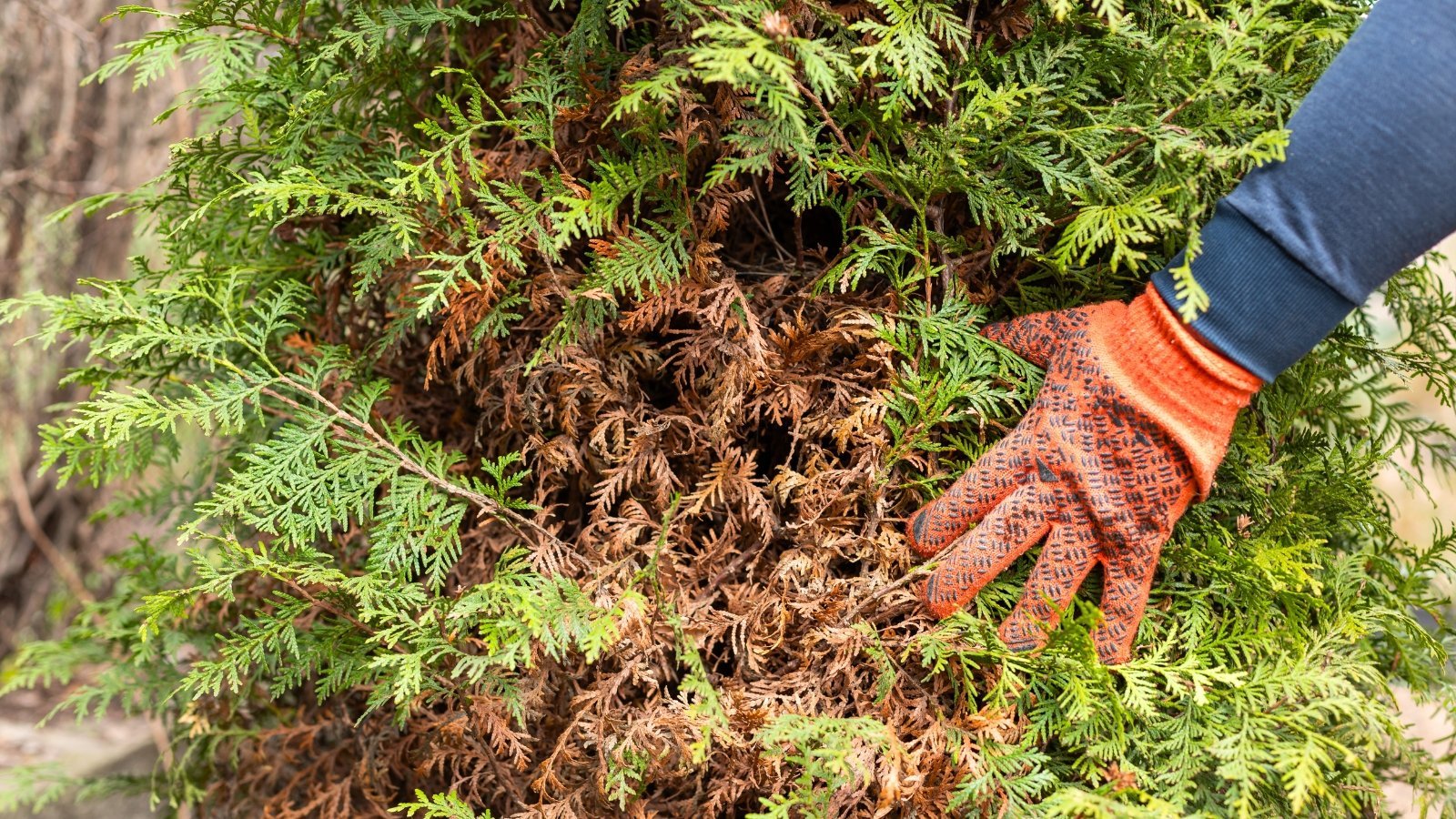
Arborvitae are a popular choice for hedges, privacy screens, and landscape accents thanks to their lush green foliage and low-maintenance appeal. But when those vibrant green needles start turning brown, panic can set in. Browning doesn’t always mean your arborvitae is doomed, but it’s a warning sign that something isn’t quite right.
Understanding the causes and solutions can save your trees and restore your landscape’s beauty. Here’s what experts say about why arborvitae turn brown—and how to fix it.
1. Environmental Stress: Sun, Heat, and Cold
Arborvitae are hardy, but extreme weather can stress them.
Sunscald and Winter Burn
- Winter burn occurs when sunlight reflects off snow or ice, causing needles to dry out.
- Usually appears on the south or southwest side of the tree.
- Browning can start in late winter or early spring.
Drought or Heat Stress
- Lack of water during hot, dry spells causes needles to dry and turn brown.
- Even established arborvitae need deep watering in summer heat.
Expert Tip: Water deeply at the base of the tree in dry periods, avoiding shallow watering that only moistens the surface. Mulching around the base helps retain moisture and moderate soil temperature.

2. Overwatering and Poor Drainage
Too much water can be as damaging as too little. Arborvitae roots need oxygen, and waterlogged soil suffocates them, leading to browning.
Latest Posts
- With Just 1 Bottle of Water How I Was Shocked by What Happened When Growing Vegetables
- Maximize Your Home Garden with the Hanging Pea Sprout Growing Model – Space-Saving, High-Yield, and Easy-to-Manage Vertical Gardening Solution
- Just Water – The Secret to Growing Plump, White Peanut Sprouts Right at Home: A Step-by-Step Guide for Beginners
- Growing Zucchini at Home in a Container: How to Cultivate Large, Long Fruits with a 1-to-72 Day Step-by-Step Diary for Maximum Yield
- Grow Long Beans on the Terrace in Used Recycling Baskets: The Ultimate Guide to Easy, Space-Saving, and High-Yield Terrace Gardening
- How to Grow Tons of Long Beans Easily Without a Garden – A Complete Guide to Growing Healthy Yardlong Beans Without Fertilizers or Pesticides
- Easy Long Bean Growing Trick – No Garden, No Fertilizer, No Pesticide
- Grow Bitter Melon in Bottles — Harvest So Big You Can’t Eat It All! The Ultimate Guide to Bottle Gardening for Maximum Yields
- Growing Garlic Made Easy: No Soil, Fast Results – The Ultimate Guide to Growing Fresh Garlic Indoors Without Traditional Soil
- Wall-Mounted Hydroponic Watermelon System: Grow Large, Juicy, and Delicious Watermelons at Home with Minimal Space and Maximum Yield
Signs of Overwatering
- Needles turn brown but remain attached initially
- Soil remains wet or soggy for extended periods
- Some branches may wilt
Fix: Improve drainage around the tree. Avoid planting in low spots where water collects. For potted arborvitae, ensure proper drainage holes and use a well-draining soil mix.
3. Fungal Diseases
Fungal pathogens are common culprits behind browning arborvitae.
Key Diseases
- Phytophthora root rot: Caused by poorly drained soil; roots decay and needles turn brown.
- Leaf blight (Kabatina, Cercospora): Fungal spores attack foliage, especially lower branches; leaves turn brown and fall.
- Tip blight: New growth tips turn brown, often progressing down the branch.
Prevention and Treatment

- Space trees to improve air circulation.
- Prune and dispose of affected branches.
- Apply fungicides if recommended for your region.
Early detection is key—fungal infections can spread quickly if left untreated.
4. Insect Infestations
While arborvitae are relatively pest-resistant, they’re not immune.
Common Pests
- Bagworms: Caterpillars that create silk bags on branches; they can defoliate trees.
- Spider mites: Tiny pests that suck sap, causing yellowing or browning of needles.
- Arborvitae leafminers: Larvae that tunnel into foliage, leading to browning tips.
Signs to Watch For
- Small webs, silk bags, or holes in foliage
- Yellowing before browning
- Uneven browning across the tree
Control Tips

- Remove bagworms by hand if infestation is small.
- Use insecticidal soap or horticultural oil for spider mites.
- Consult local extension offices for appropriate chemical treatments for leafminers.
5. Soil Issues and Nutrient Deficiencies
Arborvitae rely on healthy soil to maintain vibrant green needles. Poor soil conditions can cause stress and browning.
Common Soil-Related Problems
- Acidic or alkaline imbalance – Arborvitae prefer slightly acidic soil. Extreme pH can limit nutrient uptake.
- Nutrient deficiencies – Lack of nitrogen often causes uniform browning, especially in older leaves.
Solution
- Test soil pH and adjust with amendments (sulfur for high pH, lime for low pH).
- Apply slow-release, balanced fertilizer designed for evergreens.
6. Natural Aging
Not all browning is cause for alarm. Older needles on arborvitae naturally brown and fall off as part of the tree’s growth cycle.
What to Expect
- Browning occurs on the interior, older foliage first
- Outer needles remain green
- Seasonal needle drop is normal, particularly in fall
Tip: Observe whether the browning is limited to older foliage or spreading aggressively. Only widespread browning is a concern.

How to Revive Browning Arborvitae
Once you’ve identified the likely cause, follow these steps to help your trees recover:
Step 1: Proper Watering
- Deep, infrequent watering encourages strong roots.
- Avoid wetting the foliage repeatedly, which promotes fungal growth.
Step 2: Mulching
- Apply 2–3 inches of organic mulch around the base.
- Keep mulch 1–2 inches away from the trunk to prevent rot.
Step 3: Pruning
- Remove dead or diseased branches promptly.
- Prune during late winter or early spring before new growth begins.
- Dispose of clippings away from the tree to prevent disease spread.
Step 4: Fertilizing
- Use a slow-release evergreen fertilizer in early spring.
- Avoid over-fertilizing, which can stress the tree further.
Step 5: Pest and Disease Management
- Inspect regularly for insects or fungal signs.
- Treat promptly with organic or chemical controls, following instructions carefully.
When to Consider Replacement
Despite your best efforts, some arborvitae may not recover. Consider replacing a tree if:
- More than 50% of the canopy is brown and brittle
- New growth fails to appear in spring
- Root rot or severe pest damage is present
In these cases, choose a disease-resistant cultivar and ensure proper planting to prevent repeating the problem.
Preventive Measures for Healthy Arborvitae
- Plant in well-drained soil: Avoid low spots prone to water accumulation.
- Maintain proper spacing: Good airflow reduces fungal problems.
- Water deeply but infrequently: Encourage deep root growth.
- Regular inspection: Catch pests and disease early.
- Mulch appropriately: Retains moisture and moderates temperature, but don’t smother roots.
Final Thoughts
Browning arborvitae are common, but understanding the underlying cause is key to restoring health. Whether the issue is environmental stress, pests, fungal disease, or natural aging, arborvitae are resilient trees. With proper care, watering, pruning, and occasional fertilization, your trees can recover their vibrant green color and continue to enhance your landscape for years to come.

By acting quickly and following these expert-backed tips, browning doesn’t have to mean the end for your arborvitae. Instead, it can be a signal that your trees need a little extra care—and with the right approach, they’ll thrive again.