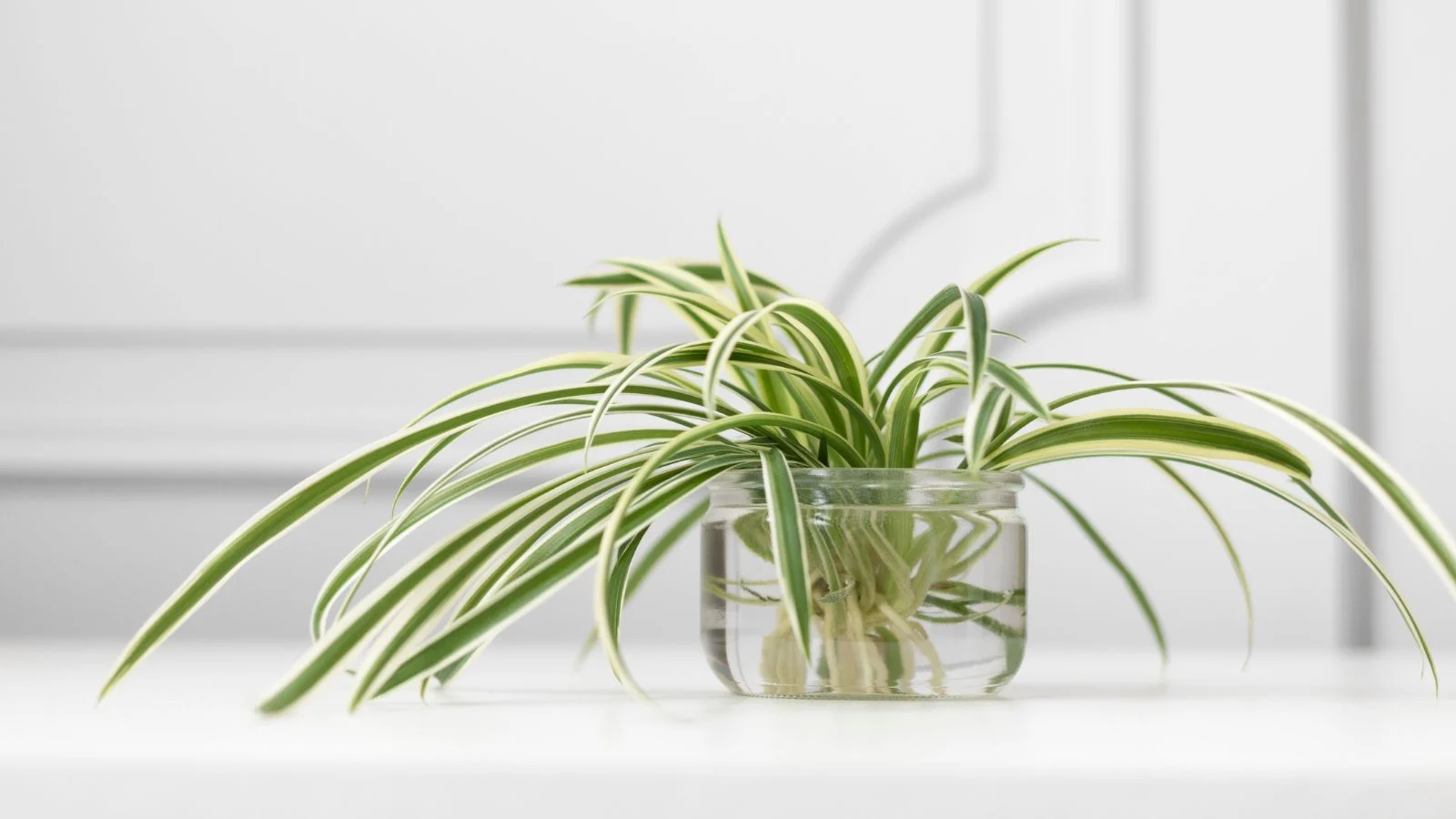
Spider plants (Chlorophytum comosum) are among the easiest and most forgiving houseplants, making them a favorite for beginners and experienced plant lovers alike. Known for their arching green-and-white leaves and dangling “babies,” spider plants are adaptable, fast-growing, and surprisingly versatile. One of their most interesting qualities is their ability to grow in water alone, without soil.
Growing spider plants in water is not only simple, but also visually appealing. It’s a great way to propagate new plants, reduce mess, and enjoy greenery in modern, minimalist spaces. With proper care, spider plants can live happily in water for months or even years.
This guide explains everything you need to know about growing spider plants in water—from choosing the right plant and container to long-term care and common mistakes to avoid.
Can Spider Plants Really Grow in Water?
Yes, spider plants can grow in water successfully. While mature spider plants are traditionally grown in soil, their offshoots—commonly called spiderettes or pups—root very easily in water. These young plants adapt quickly to hydroponic conditions, making them ideal candidates for water-only growth.
It’s important to note that while spider plants can survive long-term in water, they may grow more slowly and remain smaller than soil-grown plants. However, with proper care and nutrients, they can stay healthy and attractive.
Latest Posts
- With Just 1 Bottle of Water How I Was Shocked by What Happened When Growing Vegetables
- Maximize Your Home Garden with the Hanging Pea Sprout Growing Model – Space-Saving, High-Yield, and Easy-to-Manage Vertical Gardening Solution
- Just Water – The Secret to Growing Plump, White Peanut Sprouts Right at Home: A Step-by-Step Guide for Beginners
- Growing Zucchini at Home in a Container: How to Cultivate Large, Long Fruits with a 1-to-72 Day Step-by-Step Diary for Maximum Yield
- Grow Long Beans on the Terrace in Used Recycling Baskets: The Ultimate Guide to Easy, Space-Saving, and High-Yield Terrace Gardening
- How to Grow Tons of Long Beans Easily Without a Garden – A Complete Guide to Growing Healthy Yardlong Beans Without Fertilizers or Pesticides
- Easy Long Bean Growing Trick – No Garden, No Fertilizer, No Pesticide
- Grow Bitter Melon in Bottles — Harvest So Big You Can’t Eat It All! The Ultimate Guide to Bottle Gardening for Maximum Yields
- Growing Garlic Made Easy: No Soil, Fast Results – The Ultimate Guide to Growing Fresh Garlic Indoors Without Traditional Soil
- Wall-Mounted Hydroponic Watermelon System: Grow Large, Juicy, and Delicious Watermelons at Home with Minimal Space and Maximum Yield
Benefits of Growing Spider Plants in Water
Growing spider plants in water offers several advantages:

- No soil mess or pests
- Easy to monitor root health
- Simple propagation method
- Attractive display in glass containers
- Less frequent maintenance
Water-grown spider plants are perfect for desks, shelves, and areas where traditional pots might be impractical.
What You’ll Need to Get Started
Before you begin, gather a few basic supplies:
- A healthy spider plant pup or small plant
- A clean glass jar, vase, or bottle
- Filtered or distilled water
- Scissors or pruning shears
- Optional: liquid houseplant fertilizer
Clear containers are ideal because they allow you to observe root development and water quality.
Step 1: Choose the Right Spider Plant Cutting
The best plants for water growth are spider plant pups.
How to Identify a Healthy Pup
- Firm, green leaves
- Small root nubs or aerial roots
- No signs of yellowing or damage
You can also use a small mature spider plant, but pups adapt more easily to water-only conditions.
Step 2: Prepare the Plant for Water Growth
If the pup is still attached to the mother plant, cut the runner using clean, sharp scissors. Remove any damaged or lower leaves that may sit below the waterline, as submerged leaves can rot.

For soil-grown plants:
- Gently rinse roots under lukewarm water
- Remove all soil residue
- Trim overly long or damaged roots
Clean roots help prevent bacterial growth in water.
Step 3: Choose the Right Container
Container choice plays a big role in success.
Ideal Container Features
- Narrow neck to support the plant
- Enough depth to submerge roots
- Transparent material for monitoring
Avoid containers that force leaves to sit in water. Only the roots should be submerged.
Step 4: Add Water Properly
Fill the container with enough water to cover the roots but not the crown (where leaves emerge).
Best Water Types
- Filtered water
- Distilled water
- Rainwater
Tap water can be used, but letting it sit overnight helps chlorine dissipate.

Step 5: Place in the Right Light Conditions
Spider plants grown in water thrive in bright, indirect light.
Light Tips
- Avoid direct sunlight, which encourages algae growth
- Low light slows growth
- Rotate container occasionally for even exposure
A well-lit room without harsh sun is ideal.
How to Care for Spider Plants in Water
Change the Water Regularly
Stagnant water can lead to algae and root rot.
- Change water every 7–10 days
- Rinse roots gently during changes
- Clean the container if algae appear
Fresh water keeps oxygen levels high and roots healthy.
Add Nutrients Carefully
Unlike soil-grown plants, water-grown spider plants don’t have access to natural nutrients.
Fertilizing Tips
- Use liquid houseplant fertilizer
- Dilute to ¼ strength
- Fertilize once a month
Overfertilizing can damage roots, so less is more.

Monitor Root Health
Healthy roots are:
- White or light tan
- Firm and flexible
If roots turn brown or mushy:
- Trim damaged roots
- Refresh water
- Reduce fertilizer use
Can Spider Plants Live in Water Long-Term?
Yes, spider plants can live in water long-term with proper care. However, they may:
- Grow more slowly
- Produce fewer pups
- Stay smaller than soil-grown plants
Some gardeners choose to grow spider plants in water temporarily and later transfer them to soil for faster growth.
How to Transfer a Water-Grown Spider Plant to Soil
If you decide to move your plant to soil:
- Choose well-draining potting mix
- Plant gently without burying the crown
- Water lightly
- Keep soil slightly moist for the first two weeks
The transition is usually smooth because water-grown roots adapt easily.

Common Problems and Solutions
Yellow Leaves
- Caused by nutrient deficiency or poor water quality
- Refresh water and fertilize lightly
Algae Growth
- Reduce light exposure
- Clean container
- Change water more frequently
Root Rot
- Result of stagnant water
- Increase water changes
- Trim damaged roots
Decorative Ideas for Water-Grown Spider Plants
Spider plants look stunning in water displays:
- Glass bottles on windowsills
- Hanging glass vases
- Grouped jars for a modern look
Their arching leaves add movement and texture to any space.
Tips for Long-Term Success
- Keep roots submerged, not leaves
- Use clean containers
- Avoid direct sun
- Change water consistently
- Fertilize sparingly
Final Thoughts
Growing spider plants in water is a simple, stylish, and rewarding way to enjoy this classic houseplant. Whether you’re propagating new plants or maintaining a permanent water-grown display, spider plants adapt easily with minimal care.
By choosing healthy cuttings, providing clean water, and maintaining proper light and nutrients, you can enjoy lush, thriving spider plants—no soil required.