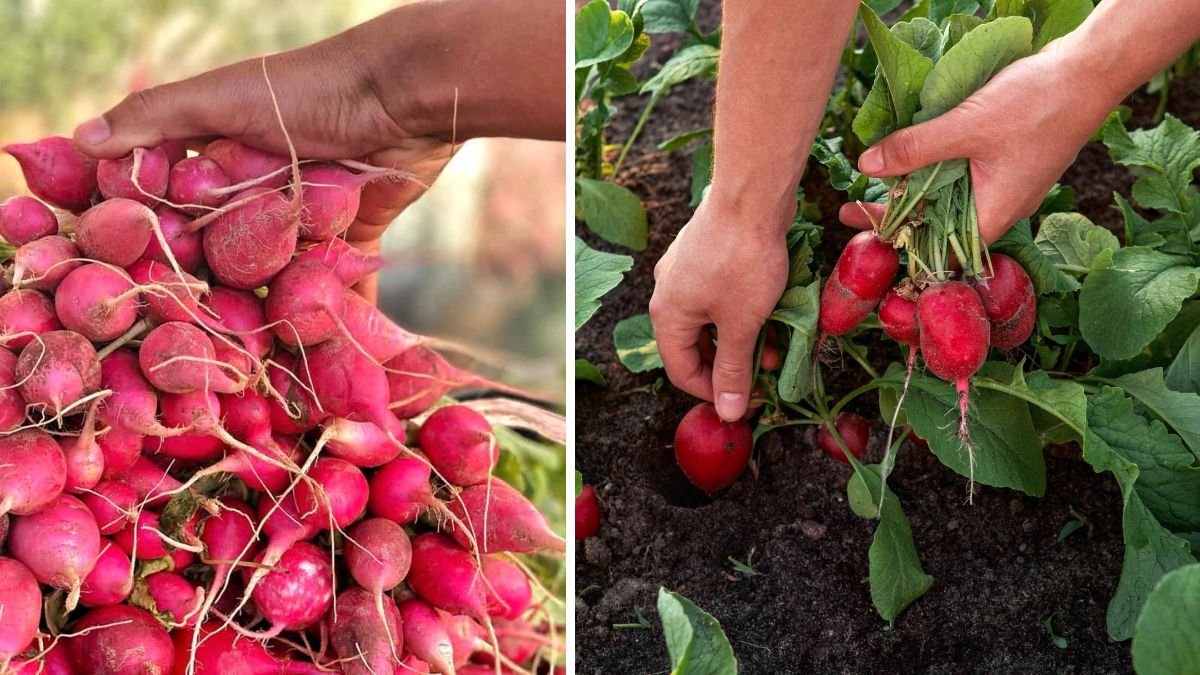
Growing your own radishes can be a rewarding experience, providing fresh, crunchy vegetables that can be used in salads, garnishes, and various dishes. This comprehensive guide will take you through every step of the process—from choosing the right seeds to enjoying your harvest.
1. Understanding Radishes
Radishes (Raphanus sativus) belong to the Brassicaceae family, which includes other vegetables like cabbage, broccoli, and mustard. They are quick-growing root vegetables, making them an excellent choice for beginner gardeners. Available in numerous varieties, they come in various colors, shapes, and sizes, with the most common being red, white, and black.
Latest Posts
- With Just 1 Bottle of Water How I Was Shocked by What Happened When Growing Vegetables
- Maximize Your Home Garden with the Hanging Pea Sprout Growing Model – Space-Saving, High-Yield, and Easy-to-Manage Vertical Gardening Solution
- Just Water – The Secret to Growing Plump, White Peanut Sprouts Right at Home: A Step-by-Step Guide for Beginners
- Growing Zucchini at Home in a Container: How to Cultivate Large, Long Fruits with a 1-to-72 Day Step-by-Step Diary for Maximum Yield
- Grow Long Beans on the Terrace in Used Recycling Baskets: The Ultimate Guide to Easy, Space-Saving, and High-Yield Terrace Gardening
- How to Grow Tons of Long Beans Easily Without a Garden – A Complete Guide to Growing Healthy Yardlong Beans Without Fertilizers or Pesticides
- Easy Long Bean Growing Trick – No Garden, No Fertilizer, No Pesticide
- Grow Bitter Melon in Bottles — Harvest So Big You Can’t Eat It All! The Ultimate Guide to Bottle Gardening for Maximum Yields
- Growing Garlic Made Easy: No Soil, Fast Results – The Ultimate Guide to Growing Fresh Garlic Indoors Without Traditional Soil
- Wall-Mounted Hydroponic Watermelon System: Grow Large, Juicy, and Delicious Watermelons at Home with Minimal Space and Maximum Yield
1.1 Benefits of Growing Radishes
- Fast Growth: Radishes can be ready to harvest in just 30 days.
- Space-efficient: They grow well in small spaces, including containers.
- Soil improvement: They help break up soil due to their fast-growing taproots.
- Nutritional value: Radishes are low in calories and high in vitamin C, potassium, and antioxidants.
2. Choosing Radish Varieties
2.1 Common Varieties
- Cherry Belle: A classic red variety with a crisp texture and mild flavor.
- French Breakfast: A fast-growing type, elongated and white-tipped, with a slightly spicy taste.
- Black Spanish: A larger, spicier variety with a dark skin, often used in cooking.
- Daikon: A long, white radish popular in Asian cuisines, excellent for salads or pickling.
2.2 Considerations
Select a variety suited to your climate and growing conditions. Spring radishes are typically best for cooler weather, while winter radishes can thrive in warmer conditions.
3. Preparing Your Garden Bed
3.1 Location Selection
Choose a location that receives full sunlight for at least 6 hours daily. Good air circulation is also important, as radishes can be susceptible to rot in overly damp conditions.
3.2 Soil Preparation
Radishes prefer well-draining, loamy soil that is rich in organic matter. Follow these steps:
- Clear the Area: Remove any weeds, rocks, or debris.
- Soil Testing: Consider a soil test to determine nutrient levels and pH.
- Add Organic Matter: Incorporate compost or well-rotted manure to enrich the soil.
- Tilling: Loosen the soil to a depth of at least 12 inches, creating a fine tilth.
3.3 Soil pH
Radishes thrive in soil with a pH of 6.0 to 7.0. If your soil is too acidic, add lime to raise the pH, or sulfur to decrease it if it’s too alkaline.
4. Sowing Radish Seeds
4.1 When to Plant
Radishes can be directly sown into the garden as soon as the soil can be worked in late winter to early spring (March to May) or in late summer for fall harvests.
4.2 Planting Instructions
- Seed Spacing: Sow seeds ½ inch deep, spaced about 1 to 2 inches apart.
- Row Spacing: Space rows 12 inches apart to allow for adequate growth.
- Watering: Water seeds gently after planting to avoid displacing them.
5. Caring for Your Radish Plants
5.1 Watering
Consistent moisture is crucial for radishes. Water them regularly, especially during dry spells, but avoid waterlogging, which can cause root rot.
5.2 Weeding
Keep the garden bed weed-free, especially in the early stages, as weeds compete for nutrients and water. Hand-pulling or using mulch can be effective.
5.3 Thinning
Once seedlings reach about 2 inches in height, thin them out to 2-3 inches apart. This helps prevent overcrowding, ensuring each radish has enough space to grow.
5.4 Fertilization
Radishes require minimal fertilizer. If needed, a balanced fertilizer can be applied right after sowing. Over-fertilization can lead to lush tops with poor root development.
6. Pest and Disease Management
6.1 Common Pests
- Aphids: These tiny insects can cluster on leaves. Spray them off with water or use insecticidal soap.
- Flea Beetles: Small black beetles that create holes in the leaves. Use row covers to protect young plants.
- Root Maggots: These pests can damage the roots. Crop rotation and using row covers can help.
6.2 Diseases
- Downy Mildew: A fungal disease causing yellow spots on leaves. Ensure proper air circulation and avoid over-watering.
- Clubroot: A soil-borne disease causing swollen roots. Rotate crops and keep soil pH around neutral to reduce incidence.
7. Harvesting Radishes
7.1 Timing
Most radish varieties are ready to harvest within 30-60 days. Harvest as soon as they reach a desirable size. Overly mature radishes can develop a woody texture and pungent flavor.
7.2 Harvesting Techniques
Gently pull the radish tops from the soil, using a small garden fork if necessary to avoid damaging them.
7.3 Post-Harvest Care
Wipe off soil and trim the tops, leaving about an inch of the stem. Store radishes in a plastic bag in the refrigerator, where they can last for about two weeks.
8. Enjoying Your Radish Harvest
Radishes can be enjoyed raw in salads, pickled, roasted, or even grilled. Experiment with various culinary preparations to discover your favorites.
8.1 Recipes
- Simple Radish Salad: Combine sliced radishes with arugula, olive oil, lemon juice, and a sprinkle of salt.
- Pickled Radishes: Quick-pickle radishes in vinegar, sugar, and spices for a zesty condiment.
- Roasted Radishes: Toss with olive oil and herbs, then roast until tender for a unique side dish.
FAQs
1. How long does it take for radishes to grow?
Most radish varieties take about 30-60 days from planting to harvest, depending on the type and growing conditions.
2. What is the ideal temperature for growing radishes?
Radishes prefer cooler temperatures, ideally between 50°F and 70°F (10°C and 21°C).
3. Can I grow radishes in containers?
Yes! Radishes grow well in containers. Choose a container that is at least 6-12 inches deep and follow the same sowing and care practices.
4. What diseases should I watch for?
Common diseases include downy mildew and clubroot. Ensuring proper air circulation and crop rotation can help prevent these issues.
5. How often should I water my radish plants?
Water your radish plants consistently, about an inch of water per week, more during dry spells, but avoid waterlogging the soil.
6. Can I grow radishes after other crops?
Yes, radishes can be grown following most crops. They are excellent for rotating with crops like beans or corn to improve soil health.
7. Are radishes frost-resistant?
Radishes can tolerate light frost, particularly varieties like the ‘Daikon’ or ‘French Breakfast’, making them suitable for early spring or fall planting.
8. Can I replant radish seeds if they don’t germinate?
Yes, if seeds do not sprout within 10-14 days, you can replant them.
Conclusion
Starting your own radish garden can be a fun and fruitful endeavor. With minimal investment in time and resources, you can enjoy the crisp, refreshing taste of homegrown radishes. By following the steps outlined in this guide, you’ll be well on your way to a successful harvest. Happy gardening!